
Riviere Custom Coffee Tables
Best Wood for a Coffee Table: Four Timbers Compared
Oak is the best wood for a coffee table if you want a durable, versatile surface with visible grain; American black walnut suits a darker statement piece, while cherry and yew offer distinctive colour and character. The right choice for your wooden coffee table also rests on the shape and size you have in mind. With a made-to-order table, the individual slab has as much influence on the finished look as the species name.
A photograph of timber helps you choose a direction, but the available boards reveal the grain, knots and contours your table will carry. If you have dimensions or a particular look in mind, you can start a conversation with us on 07923 043101.
How Do Oak, Walnut, Cherry and Yew Compare?
Oak offers the most flexible starting point for a hard-wearing table; the other three bring more specific colour and grain preferences into focus. All four are hardwoods, yet no species produces identical slabs.
| Consideration | Oak | American black walnut | Cherry | Yew |
|---|---|---|---|---|
| Colour | Light to warm brown | Rich dark brown | Warm pink to reddish brown | Strong light-and-dark contrast |
| Grain | Prominent | Flowing | Fine and even | Irregular, characterful |
| Design fit | Classic or contemporary | Dark statement piece | Quiet, warm design | Sculptural design |
| Everyday wear | Good dent resistance | Softer than oak | Can show dents | Assess the slab |
| Slab availability | Discuss available shapes | Can be limited | Discuss available shapes | Can be limited |
On smaller screens, swipe across the table to compare all four timbers.
01
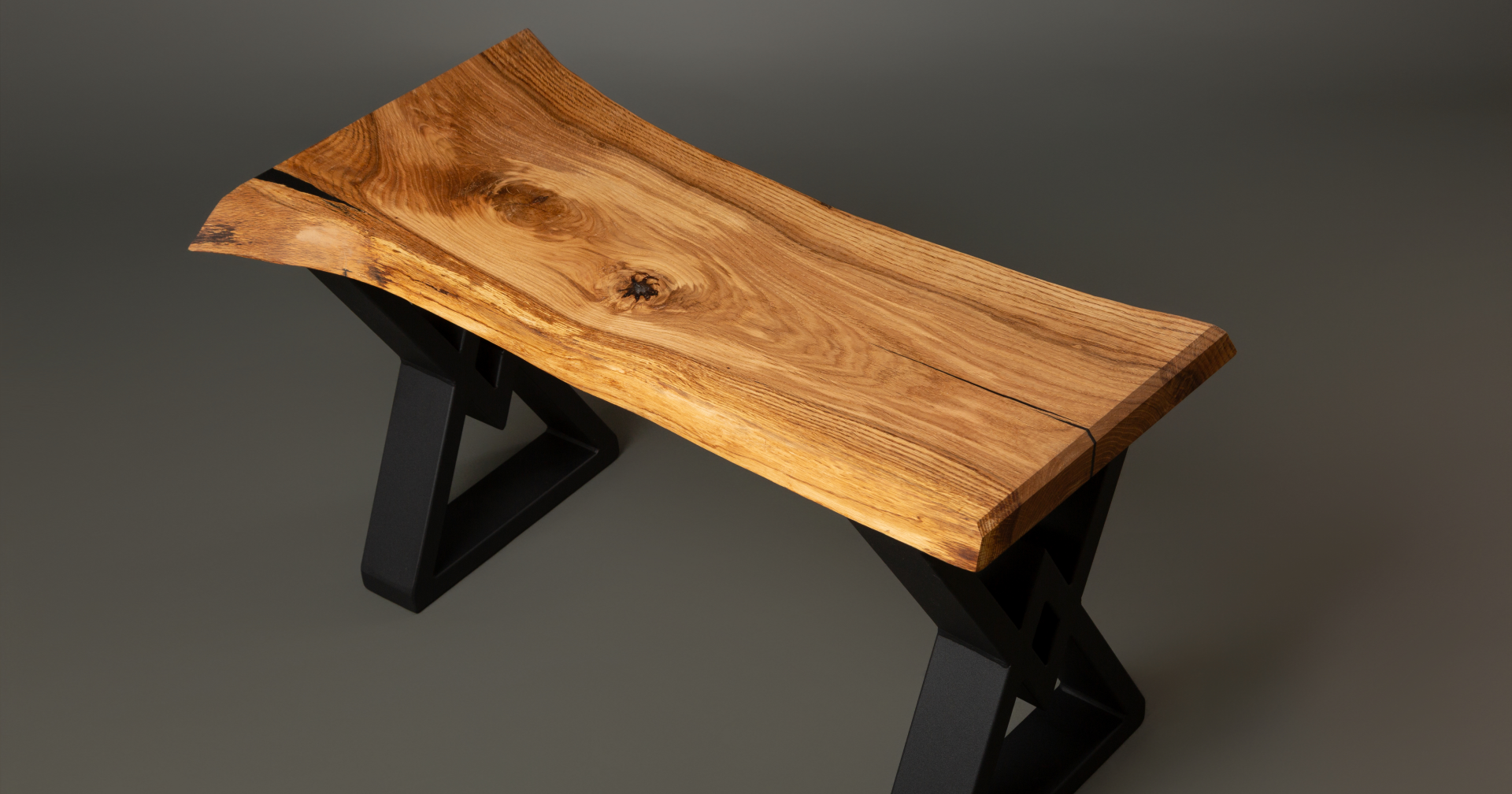
Oak: Versatile Grain and a Classic Look
Oak’s pronounced wood grain gives a top texture and movement without dictating one furniture style. A straight-edged slab works with a restrained design, while live-edge wood lets the tree’s natural outline become part of the silhouette. Oak also takes the black epoxy detailing used in some of our designs.
White oak and red oak are useful distinctions when comparing furniture specifications. White oak is generally harder and has a different pore structure; red oak has a warmer, sometimes pinker cast. For a commission, ask which oak is available and look at the actual timber, since cut and grain figure change the appearance substantially.

02
American Black Walnut: Rich Colour and Flowing Grain
American black walnut brings deep brown colour and sweeping grain to a walnut coffee table. Its darker surface creates a strong contrast beside pale upholstery, and lighter sapwood within a slab can become an intentional part of the design.
Walnut coffee tables suit you if natural colour is the main attraction. Walnut is softer than oak, so sharp impacts are more likely to leave dents. American black walnut availability can also be limited; our timber selection process starts with what trusted sawmills and timber yards have available for the dimensions you need.

03
Cherry: Warm Colour That Changes with Age
Cherry wood has a finer, quieter grain than oak and starts with a gentle pink-to-reddish-brown warmth. Exposure to light deepens its colour over time, which is part of its appeal if you want a table that develops a richer tone in your room.
Cherry suits a design where a smooth-looking surface and warm colour take precedence over bold grain. It is a solid hardwood for furniture, though its surface can pick up dents under hard knocks. Keep objects from sitting in the same position for long periods if you want the colour change to develop evenly.
04
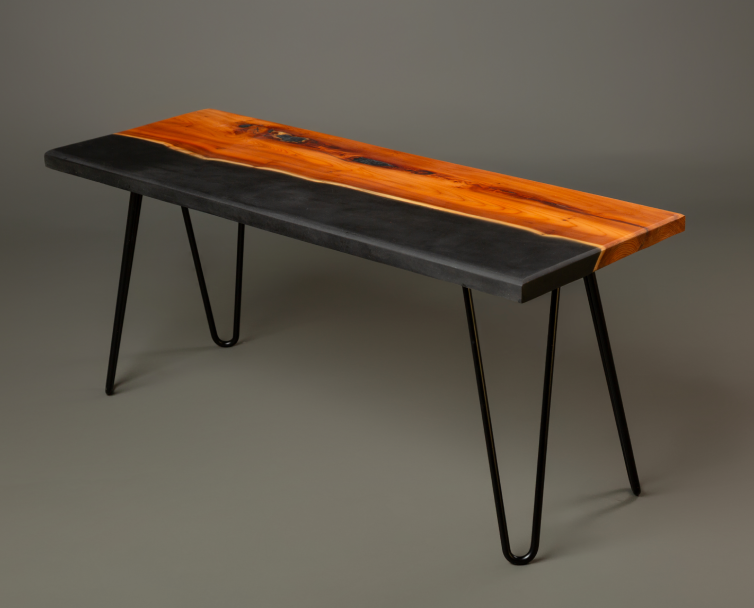
Yew: Distinctive Colour and Natural Character
Yew draws attention through its contrasting colours, knots and irregular grain. Those features make it compelling for a sculptural top, particularly when you want the timber’s natural character to lead the design.
The shape and soundness of an individual yew slab need careful consideration before dimensions are agreed. Supply can be limited, and a preferred outline may dictate the final proportions. Photographs of available timber are especially helpful here: two yew slabs can lead to very different tables.
What About Other Woods for Coffee Tables?
Maple and ash are useful alternatives when you want a pale hardwood; pine offers a softer, more casual surface. Other wood for coffee tables includes engineered materials, each with construction and repair considerations distinct from a solid slab.
Maple, Ash, Birch and Mahogany
Hard maple has a pale, subtle grain and strong resistance to denting, making a maple coffee table a good fit for a clean-lined room. Ash is also pale, with a more prominent grain. Birch offers a lighter, relatively even appearance.
Mahogany names a group of timbers, so appearance and hardness vary with the species sold under that name. A mahogany coffee table makes sense if you favour reddish-brown colour; confirm the exact timber before comparing its everyday wear with oak or maple.
Pine, Cedar and Other Softwoods
Pine wood gives a pine coffee table visible knots and a relaxed look, though it dents more readily than the hardwoods above. Pine coffee tables work well when you welcome the marks of daily use as part of a rustic finish.
Cedar and fir are also softwoods, but their properties differ by species. A cedar coffee table may appeal for its colour and grain; check the particular timber and top construction if the surface will see frequent knocks. Poplar is botanically a hardwood yet relatively soft for a tabletop, which shows why the hardwood or softwood label alone is a poor durability test.
Reclaimed Wood, Bamboo and Plywood
Reclaimed wood brings existing marks and colour variation into a design. Its suitability rests on the condition, stability and dimensions of the pieces available.
Bamboo table panels are manufactured from strips, while plywood uses bonded layers, sometimes topped with a decorative veneer. Both offer different visual effects from a solid slab. If you are comparing the best wood for coffee tables by repairability, check the thickness of any veneer: a thin surface leaves less material for future sanding.
How Do You Choose Timber for Your Design?
Start your coffee table design with the colour and outline you want, then check which available slabs can deliver the right proportions. Hardness helps you anticipate dents, but slab shape and sound construction also affect long-term use.
Which Wood Fits the Look You Want?
Choose oak for prominent grain and styling flexibility, walnut for deep colour, cherry for restrained warmth, or yew for irregular natural character. Samples establish a direction; photographs of the proposed slab show the knots, colour shifts and edge you would live with.
Leg design changes how the same top reads in a room. Our made-to-order allows the timber, finish and legs to be considered together, so you can decide whether the base should stand out or leave the top as the focal point.
How Do Slab Shape, Size and Availability Affect the Choice?
Measure the space around your seating before settling on a top. A typical table we make is around 1 m by 40 cm, but a solid slab’s width follows its natural contours, and the available timber may suggest a different proportion.
Our custom made process begins with your desired dimensions and a discussion of suitable timber. We share timber-selection photographs, which lets you consider the proposed piece before it is shaped. For American black walnut or yew, allow flexibility if the available slabs do not match your first-choice outline.
What Can Hardness Tell You About Everyday Use?
A Janka hardness rating measures the force needed to press a steel ball into wood. It gives you a way to compare resistance to denting: hard maple rates above American black walnut, for example.
Wood durability includes more than that rating. A harder surface still needs a suitable wood finish, and even a well-finished top deserves coasters and prompt attention to spills. If dents would bother you, use hardness to narrow your choices, then judge the grain and proposed slab on their own merits.
How Do Finish and Construction Affect a Table’s Lifespan?
A protective finish and movement-aware construction help solid timber remain serviceable through daily use and seasonal humidity changes. Neither replaces a sound choice of slab.
Hardwax Oil and Other Wood Finishes
Our tables receive multiple hand-buffed coats of premium hardwax oil. This food-safe, water-resistant finish brings out the grain and allows a damaged area to be repaired without sanding the entire surface. Water-resistant still calls for wiping up spills and using coasters for hot drinks.
A plain oil finish offers a natural feel but varies in protection according to the product and its maintenance. A polyurethane finish forms a surface film that some buyers prefer for its coating-like protection; local damage can be less straightforward to blend into the surrounding finish. Ask how a finish will look and be maintained on the timber you choose. Our repair and restoration work reflects the value of making future care part of that conversation.
Joinery and Fixings That Allow Wood to Move
Solid wood expands and contracts as indoor humidity changes. A tabletop fixed rigidly across its width risks stress as it moves, so the way the legs attach matters alongside the strength of the joinery.
We prepare, flatten, shape and sand each selected piece, adding reinforcement where appropriate. Stable joinery and hardware that permits natural wood movement connect the top to powder-coated steel legs made by UK fabricators. The finished table travels with a specialist furniture courier.
Choosing a Timber You’ll Enjoy Living with
Oak is a dependable choice when you want visible grain and good resistance to everyday dents. Choose American black walnut for rich darkness, cherry for warmth that deepens with age, or yew when an available slab’s individual character captures the look you want.
Once you have a colour, approximate size and preferred edge in mind, we can discuss available timber and the details of your table. Call 07923 043101 or Contact us to request a personalised quote; delivery costs are included in each quote, and every table comes with a lifetime guarantee.
Frequently Asked Questions
Is oak or walnut better for a coffee table?
Oak is the stronger choice if dent resistance and a lighter, pronounced grain are your priorities. American black walnut suits you if you prefer a naturally dark top with flowing grain and are comfortable giving it a little more care around sharp impacts.
What is the most durable wood for a coffee table?
Hard maple offers particularly strong resistance to denting among common furniture timbers, while oak is a durable choice with more visible grain. The finish, joinery and how you care for the table also influence its lifespan.
Is pine suitable for a coffee table?
Pine suits a casual or rustic coffee table if you are happy for dents to become part of its appearance. For a top you want to keep free of everyday marks, consider a harder timber such as oak.
What is the best wood finish for a coffee table?
Hardwax oil is a practical choice if you want visible grain, water resistance and the option of local repairs; it is the finish we use on our tables. A polyurethane finish gives a different, film-coated surface, so choose with the appearance and future maintenance in mind.
Can I choose the exact slab for a made-to-order table?
Yes. Once we have agreed which type of wood and style you would prefer, the slab choices will be shared with you so you can view your exact choice. If you would prefer not to have that amount of choice, we can make the selection for you.