
Riviere Journal · Materials & Design
Resin vs. Wood Coffee Table: Which Suits Your Home?
I recommend an all-solid-wood coffee table if you want natural character and the option for future refinishing. A timber-and-resin coffee table suits you if you want decorative colour or clear detailing alongside the grain. Both approaches create distinctive handmade furniture, and many resin designs still contain substantial solid timber.
The useful distinction in a resin vs wood coffee table comparison is how the piece is made and finished. I work with exposed resin only where it is part of the design itself — I do not add a protective resin coating over the whole surface. Timber in either design still responds to changes in indoor humidity.
I encourage you to consider the surface you will live with: its feel, how it shows wear and what restoring it involves. That gives you a practical basis for choosing a table that suits your room and everyday routines.
01 / The comparison
What Are the Main Differences at a Glance?
I see these as overlapping furniture categories: both celebrate natural timber, while resin introduces additional decorative choices. The finish determines much of the day-to-day care.
How Timber-and-Resin Tables Differ From All-Solid-Wood Tables
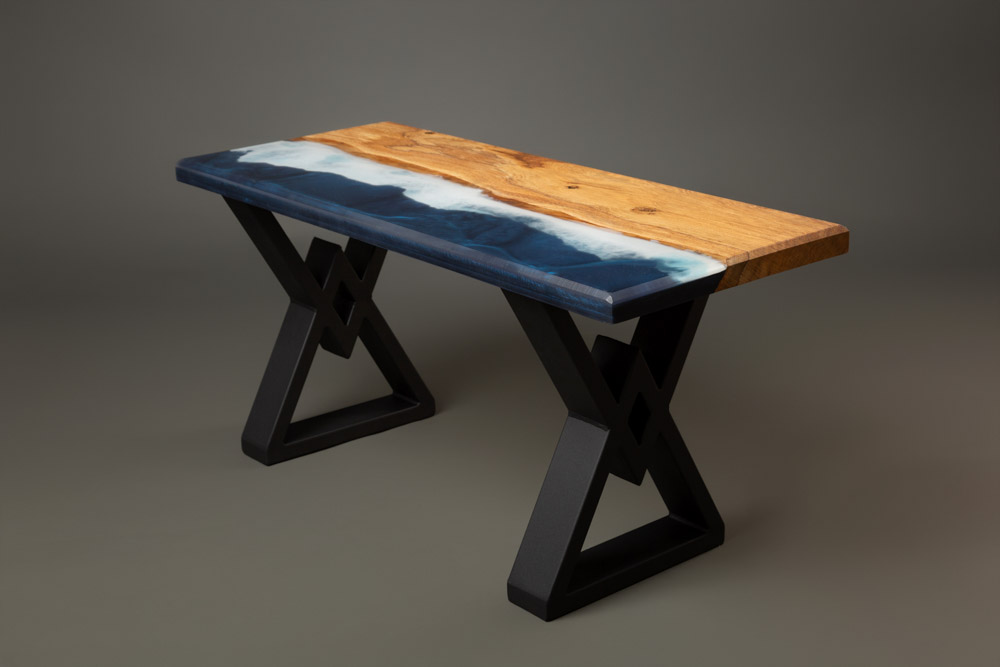
A wood and resin coffee table combines timber with cured resin, which fills selected openings or forms a larger part of the top, such as in my Ocean Wave table. A river table places a resin channel between timber sections; smaller pours highlight cracks or natural voids. My Coffee Culture table is an example of a river table, with a unique twist: the coffee beans.
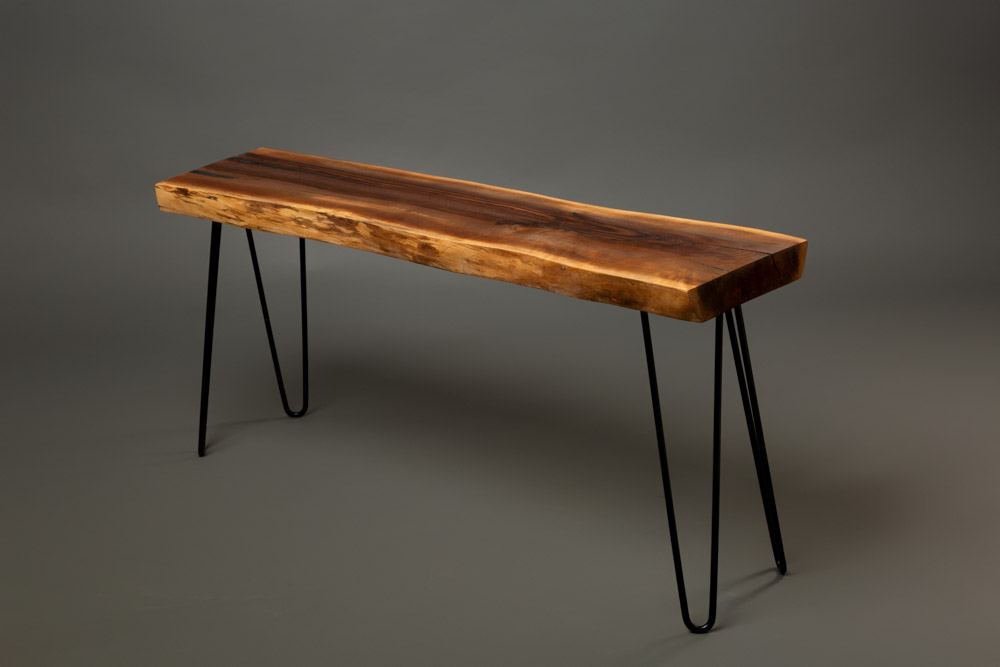
An all-solid-wood live-edge table keeps timber as the main tabletop material. Its character comes from wood grain, colour, the live edge and the fact that it is formed from one slab of hardwood, not strips glued together. Small stabilising fills are also worth discussing if you have a particular preference about resin content.
I distinguish a resin table with exposed resin from a timber top finished only with hardwax oil. I do not apply epoxy coatings over timber surfaces.
Comparing Appearance, Wear, Care and Repairability
I use the following comparison as a starting point, with the chosen finish qualifying each care recommendation.
| Criterion | All-solid-wood table | Timber-and-resin table |
|---|---|---|
| Appearance | Grain-led; natural contours | Grain plus clear or coloured detail |
| Everyday wear | Dents and finish scratches | Timber dents; resin scuffs |
| Heat and spill precautions | Coasters; prompt wiping | Coasters; prompt wiping |
| Maintenance | Finish-specific cleaning and renewal | Separate timber/resin guidance |
| Repairability | Local oil repairs; possible refinishing | Resin repairs need sheen matching |
| Natural wood movement | Movement-allowing construction | Timber still needs movement allowance |
On smaller screens, swipe across the table to compare both approaches.
Neither category fixes the sheen of the finished piece. Timber finishes range from matt to glossy, and exposed resin also receives different surface treatments. I recommend discussing the specified finish closely, especially if reflections or fingerprints would bother you.
Explore the resin designs
Colour, Clear Resin and Natural Timber



Explore the solid-wood designs
Let the Natural Grain Lead


02 / Built for everyday life
What Determines Durability and Everyday Performance?
Lasting performance comes from a suitable resin system, prepared timber and sound construction working together. I give the protective hardwax oil finish and underside fixings the same attention as the visible top.
How Resin Formulation and Curing Affect the Surface
Epoxy resin needs its specified hardener, mixed in the correct proportion and cured under suitable conditions. Curing continues beyond the point when resin first feels solid. I allow the full cure before sanding or finishing the surrounding timber.
For an epoxy resin table, I recommend asking about heat precautions and sunlight exposure for the completed surface. “Epoxy” alone does not establish a suitable surface for hot objects placed directly upon it or guarantee resistance to scratches.
Why Timber Preparation and Movement Matter
Timber needs appropriate drying and preparation before shaping or resin work. Flattening establishes the surface, while careful preparation of the bonding areas helps resin adhere properly. Loose bark or unsound material at an edge needs attention before a pour.
Solid wood exchanges moisture with its surroundings and changes dimension across the grain. This continues in a timber-and-resin design, so the assembly needs to accommodate that behaviour.
In my woodworking, I select timber from trusted sawmills and timber yards, then prepare, flatten, shape and sand it. Structural details are added where needed, with the individual slab guiding the work.
How Finish, Joinery and Leg Fixings Influence Longevity
A protective coating influences stain resistance, surface feel and the work involved in later repairs. I use multiple hand-buffed coats of premium hardwax oil — never resin coatings — to bring out the grain and allow repairs without sanding the entire surface.
I fit high-quality, powder-coated steel legs from UK fabricators using hardware that allows for natural wood movement. When comparing commissions, ask how the top is attached and which maintenance products suit its exact finish.
03 / Care & restoration
How Do Cleaning, Protection and Repairs Compare?
I recommend gentle cleaning for both materials, not harsh cleaning products. Repairs need to match the damaged layer, whether that is the finish, the resin casting or the wood beneath.
Protecting Exposed Resin From Heat, Scratches and Sunlight
Use coasters beneath drinks and an insulating mat beneath hot items. Direct heat risks marking or softening some resin systems, so follow the stated limits for the finished table.
For routine cleaning, I recommend a soft cloth and the cleaner approved for the surface. Lift grit away before wiping, and avoid abrasive pads or unapproved solvent cleaners. Dragging a rough-bottomed ornament across exposed resin leaves a different kind of wear from ordinary dusting.
Prolonged direct sunlight increases the risk of colour change in epoxy resin. Ask about placement beside a bright window and any UV protection in the specified system; UV-resistant formulations still need sensible positioning.
Caring for Hardwax-Oiled Timber and Cleaning Up Spills
Hardwax-oiled timber benefits from prompt spill removal and light cleaning. Blot liquid with a soft absorbent cloth, then wipe with a lightly damp cloth and dry the surface.
Water resistance provides time to respond to a spill, but standing liquid creates unnecessary risk. Check beneath plant pots and other objects that trap moisture against the finish.
When Local Repairs Work and When Specialist Help Is Needed
Small marks in a hardwax-oiled timber surface are candidates for local repair. The process depends on the depth of the damage and the finish’s colour.
Exposed resin requires a different approach. Removing a scratch involves restoring the surrounding sheen, and a polished patch will stand out against a lower-sheen surface. Contact me before using abrasives or a polishing compound.
Cracks through a pour, separation at the timber-resin boundary or movement around the base deserve professional assessment. Send clear photographs and describe when the damage appeared so I can advise on a suitable repair.
04 / Choosing your table
Which Table Suits Your Room, Routine and Budget?
Choose the visual balance first, then check its size and care requirements against daily use. A commission quote should reflect the selected timber and construction, including the amount and complexity of resin work.
Choosing Between Natural Grain and Decorative Resin
An all-solid-wood table gives wood grain the leading role. Oak brings a different colour and grain pattern from American black walnut, so compare actual timber photographs alongside your flooring and upholstery.
Resin offers anything from a restrained dark accent to a prominent coloured feature. In a contemporary interior, a narrow resin detail gives a different effect from a broad river, even when both use the same timber.
My designs include oak with black epoxy detailing and the Ocean Wave design combining oak and resin. The Coffee Culture table suspends real coffee beans in clear epoxy between two pieces of live-edge oak. I also work with cherry and yew, subject to timber availability. To create your custom table, I can match the epoxy to your preferred colour.
Comparing Commission Costs and Long-Term Upkeep
Resin work adds materials and production stages, while timber selection also has a substantial influence on a commission. A large, characterful slab of scarce timber brings a different cost from a smaller top with modest resin detailing. I avoid assuming that either category always costs more.
Compare quotes for equivalent dimensions, timber and leg quality. Ask whether the price includes delivery and what care products or future repair work would involve.
My personalised quotes include delivery costs, with completed orders transported by specialist furniture couriers. Every table comes with a lifetime guarantee; I encourage you to discuss its terms alongside finish care when commissioning.
Your room. Your proportions. Your table.
Choose the Balance of Natural Character and Resin Detail That Suits You
I recommend all-solid wood when your priority is uninterrupted natural timber and a finish suited to future renewal. A wood and resin coffee table gives you additional ways to introduce colour or preserve an interesting opening within the slab.
For either choice, confirm the actual timber, surface finish and construction before approving the design. Ask for care instructions that distinguish the wood from any exposed resin.
If you would like to discuss a personalised commission, contact me or call +44 7923 043101. From my workshop in the Erewash Valley, on the Nottinghamshire–Derbyshire border, I will help you consider timber, dimensions, resin detailing and finish for your room.
05 / Your questions answered
Frequently Asked Questions
Can I put a hot mug directly on a resin or wood coffee table?
I recommend a coaster beneath a hot mug on either surface. Heat resistance varies with the resin system and finish, so ask about the completed table’s limits.
Which coffee table surface shows scratches more easily?
Fine scratches are more visible on smooth, high-gloss surfaces, especially dark or clear resin viewed in angled light. Low-sheen finishes and pronounced wood grain help disguise minor wear, although both timber and resin need protection from abrasive objects.
Will spilled coffee stain resin or oil-finished wood?
Spilled coffee risks marking either surface if left in place, so blot it promptly. Intact resin resists liquid penetration, while oil-finished timber relies on its maintained finish; damaged areas and joints need particular attention.
Does a resin coffee table need oiling?
Exposed epoxy resin itself needs no oiling, while the timber may require maintenance oil. Use only the products specified for each part of your resin coffee table.
Is a resin coffee table durable enough for everyday use?
A well-made timber-and-resin coffee table is suitable for everyday domestic use when its construction and finish suit that purpose. Confirm the care requirements before ordering, then use coasters and address surface damage before it worsens.